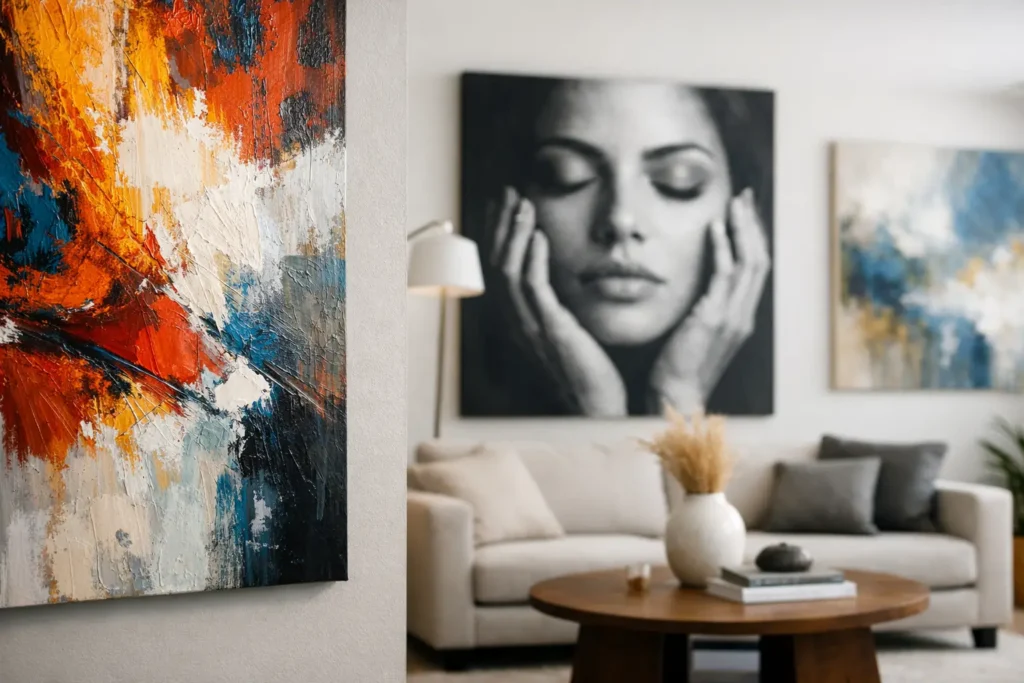
A room changes the moment the right artwork goes on the wall. Not just visually, but emotionally. The best featured contemporary artists do more than fill space – they give a home, office, or collection a point of view. They create energy, start conversations, and make a place feel lived in by someone with taste, curiosity, and confidence.
That is why featured artists matter so much in a gallery setting. When a gallery puts its weight behind a select group of contemporary voices, it is not simply highlighting what is available. It is making a curatorial statement. It is saying these are artists worth your attention, worth your wall space, and often worth returning to over time as your collection grows.
Why featured contemporary artists matter
Not all contemporary art lands the same way. Some work is technically impressive but emotionally distant. Some is trendy for a season and then loses its charge. Featured contemporary artists tend to hold attention for a different reason. Their work has identity.
That identity might come through bold color, a recognizable hand, pop culture fluency, raw materiality, or a personal mythology that runs through every piece. Whatever the source, strong contemporary artists make themselves known quickly. You do not need an academic background to feel it. You can sense when an artist has a real voice.
For collectors and first-time buyers alike, that matters. Buying art is rarely just about matching a sofa or filling a blank hallway. Most people want to live with something that keeps giving back. The right piece can shift the mood of a room in the morning, catch your eye differently at night, and reveal new details years later. That kind of staying power is often what separates a merely attractive piece from one that earns its place.
What makes an artist worth featuring
A featured artist is not simply someone with name recognition, although that can help. Recognition opens the door. What keeps an artist in focus is consistency, presence, and the ability to connect.
In a strong gallery program, featured artists usually share a few qualities. Their work feels distinct without becoming repetitive. They can command a wall, but they also reward close looking. And most importantly, they have enough substance behind the work that a collector can build a relationship with it.
That relationship piece gets overlooked in online art shopping, where everything is flattened into thumbnails and price filters. In person, the experience is different. Scale becomes real. Texture matters. Surface, framing, and color intensity all start to speak. A work that looked playful on a screen may feel commanding in a room. Another that seemed loud online may turn out to be exactly what the space needed.
This is one reason galleries still play such an important role. They help separate noise from signal. A featured artist has already passed through a curatorial filter, and for buyers, that creates confidence.
Featured contemporary artists and the collector’s eye
Collectors do not all buy for the same reason, and that is healthy. Some want emotional connection first. Some care about artist history and cultural relevance. Some are building a collection with long-term value in mind. Most sit somewhere in between.
Featured contemporary artists appeal across those motives because they tend to offer both immediacy and depth. A Peter Mars work, for example, can bring pop energy and instant visual punch. A Hunt Slonem piece can offer repetition, rhythm, and a signature sensibility that reads beautifully in both traditional and modern interiors. A figure tied to the Warhol orbit carries a different kind of draw – one shaped by cultural memory, celebrity, and American art history.
The point is not that every buyer wants the same artist. It is that featured artists make choice easier because they give you a stronger starting point. You are not searching the entire art market alone. You are entering through a door opened by someone with a practiced eye.
That is especially useful for newer collectors, who often know what they like but do not yet know how to evaluate quality, context, or staying power. A good gallery can translate those things without making the process feel exclusive or overcomplicated.
How art changes a home or business
People often underestimate how much original art can organize a space. Furniture fills a room, but art gives it character. It can soften a hard-edged modern interior, wake up a neutral palette, or pull together elements that otherwise feel disconnected.
Featured contemporary artists are particularly effective here because their work often carries strong personality. That personality can become the anchor for a room. In a home, that might mean a statement piece above a fireplace, a vivid salon wall in a dining room, or a more intimate work in a bedroom or study. In a business setting, it can mean creating a memorable first impression in a lobby, conference room, or hospitality space.
There is a practical side to this too. Buyers want art that feels special, but they also want guidance on scale, placement, and fit. A piece can be excellent on its own and still be wrong for a particular wall. This is where gallery relationships matter. The best buying experience is not about pressure. It is about perspective.
The difference between trend and staying power
Contemporary art is a wide field, and not every rising name becomes a lasting one. That does not mean buyers should only play it safe, but it does mean hype should not be confused with substance.
Featured contemporary artists with staying power usually have a few things working in their favor. They have a visual language that feels developed, not borrowed. They have bodies of work that show commitment rather than one-off novelty. And they create pieces people genuinely want to live with, not just post online.
There is always an it depends factor here. Some collectors love the thrill of discovering an artist before the broader market catches on. Others would rather buy artists with established followings and proven reputations. Neither approach is wrong. The smarter move is understanding which kind of collector you are and buying accordingly.
For many people, the sweet spot is an artist whose work feels accessible but not ordinary – recognizable enough to inspire confidence, individual enough to feel personal.
Why gallery curation still matters
The internet gives buyers reach, but it does not always give them clarity. Endless inventory can create the illusion of choice while making it harder to tell what is truly compelling. A well-curated gallery does something different. It edits.
That editing is valuable because it reflects taste, experience, and accountability. When a gallery features an artist, it is putting its reputation behind that work. For buyers, especially those investing in original art for a home or collection, that level of trust matters.
It also makes the process more enjoyable. Instead of sorting through thousands of disconnected listings, you can focus on artists who have already been selected for their quality, voice, and relevance. That turns art buying into a conversation rather than a transaction.
In Chicago, where collectors, designers, and culturally engaged buyers often want both personal service and a strong point of view, that gallery model still carries real weight. It is one reason spaces like David Leonardis Galleries remain meaningful. People are not only looking for art. They are looking for someone who can help them recognize the right art when they see it.
How to choose among featured contemporary artists
Start with your reaction. If a work stops you, that matters. Then look longer. Ask whether the piece still holds your attention after the first burst of color or familiarity. Ask whether you can imagine living with it, not for a week, but for years.
After that, consider context. Where will it hang? What else is in the room? Do you want the piece to lead, complement, or challenge the space? There is no single correct answer. Some collectors want harmony. Others want friction. Both can work beautifully when chosen with intention.
It also helps to think beyond one purchase. Great collecting often happens piece by piece. The first artwork is not the final word on your taste. It is the beginning of a visual life that gets sharper over time.
That is what makes featured artists so compelling. They offer a place to begin with confidence, but they also leave room for growth. You can fall for a single piece, then start to see how one artist connects to another, how one room can lead to a collection, and how living with art changes the way you experience your own space.
The right artist does not just decorate a wall. They stay with you, and that is usually the best sign you are looking in the right direction.